In 1910, a medieval merchant's house that had stood for 444 years in the City of London completed an extraordinary journey. More than 1,500 numbered pieces of stone and timber were transported five miles across London to Cheyne Walk, where the building was painstakingly reassembled on land that once belonged to one of its most famous residents.
From Bishopsgate to Cheyne Walk
Crosby Hall's Great Hall was built in 1466 by Sir John Crosby, a wealthy wool merchant and alderman of the City of London. Situated on Bishopsgate, it was then known as Crosby Place and was considered one of the finest private residences in medieval London. Over the centuries, it welcomed a remarkable succession of occupants: Richard III used it as his London residence in 1483; Catherine of Aragon stayed there upon her arrival in England in 1501; Sir Thomas More purchased it in 1523; and Sir Walter Raleigh lodged there in 1601.
By the early 20th century, the Chartered Bank of India, Australia, and China had acquired the site for £175,000 and planned to demolish the medieval structure to make way for a new headquarters. The threat of destruction prompted a preservation campaign led by the City of London Corporation, with Sir Vezey Strong chairing the committee. The National Trust and British Archaeological Society joined the effort, arguing that the building was "the only existing example of a medieval merchant's house in the City."
King Edward VII personally intervened, writing on 6 August 1907 to Sir Laurence Gomme, Clerk of the London County Council, expressing hope that "means may be found to preserve such an interesting relic of old London." The bank ultimately agreed to fund the salvage, cataloguing, and storage of the building, while the London County Council provided a new site in Chelsea.
The Stone-by-Stone Relocation
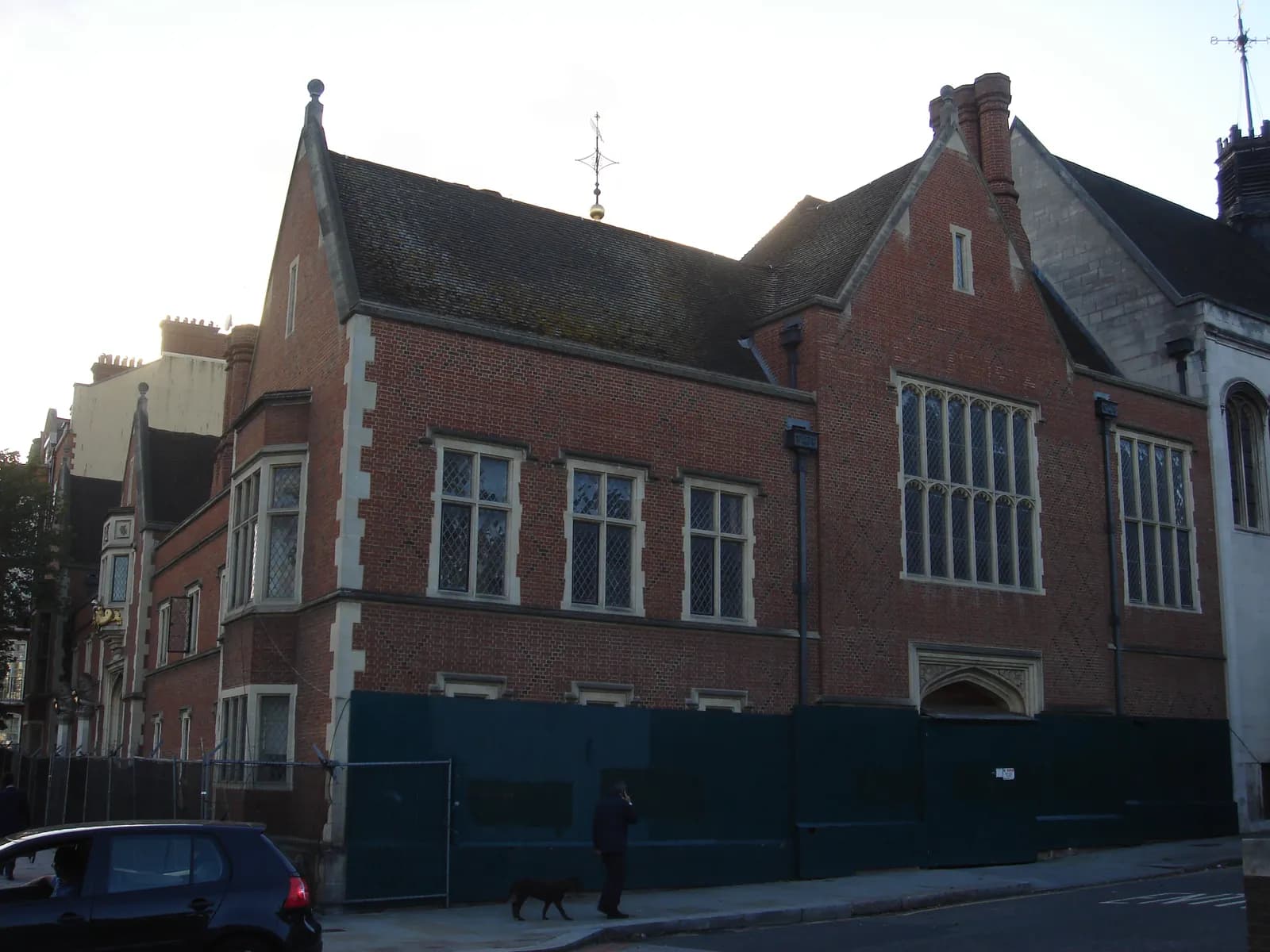
The relocation, completed in 1910, was a triumph of early 20th-century conservation engineering. Each piece of the medieval fabric was numbered, catalogued, and transported across London to a site on Cheyne Walk that had once formed part of Thomas More's own riverfront estate; a poetic reuniting of building and former owner.
Conservation architect Walter Godfrey, described as one of the outstanding preservation architects of his generation, oversaw the reconstruction. He designed Neo-Tudor brick additions to complement the Great Hall, creating a harmonious ensemble that respected the building's medieval origins while adapting it for modern use. The construction work was carried out by the firm Trollope and Colls.
From Refuge to Residence
The Duchess of York, later Queen Elizabeth The Queen Mother, formally opened Crosby Hall on its Chelsea site in 1926. The British Federation of University Women took a long lease and commissioned Godfrey to build an Arts and Crafts residential block at right angles to the Great Hall between 1925 and 1927. For six decades, the building served as a hall of residence for visiting university women, including some who had fled Nazi Germany in the 1930s.
In 1988, businessman Christopher Moran purchased the property. The building was renamed Crosby Moran Hall in 2021, following extensive restoration and the addition of new ranges designed to complete the architectural composition. The garden was restored using only plants found in Tudor England, creating an authentic period setting for the medieval hall.
The Great Hall and its additions from 1910 and 1925–1926 are now Grade II* listed, recognised as significant examples of early conservation architecture and the thoughtful integration of medieval fabric with sympathetic modern additions. The complex remains a private residence, its Great Hall standing as testament to one of London's most ambitious architectural preservation projects.