Cheyne Walk has been home to an extraordinary concentration of creative talent for over three centuries. Writers, painters, musicians and thinkers have lived along this riverside street, earning it a reputation as one of London's most culturally significant addresses.
Origins and Early History
The street takes its name from William Cheyne, Viscount Newhaven, who owned the manor of Chelsea until 1712. Most of the houses were constructed in the early eighteenth century in the Queen Anne and early Georgian styles.
Before the construction of Chelsea Embankment in 1874, the properties enjoyed direct frontage onto the River Thames. The site had previously held Chelsea Manor, built by Henry VIII in the 1530s. The oldest surviving building on the Walk is Lindsey House, completed in 1674, which stands on the former site of Thomas More's garden.
Literary Residents
The apartment block Carlyle Mansions, built in 1886, has earned the nickname "Writers' Block" for its remarkable density of literary residents. Henry James spent his final years at flat 21 and died there in 1916. T. S. Eliot lived at flat 19, while W. Somerset Maugham occupied flat 27. Ian Fleming, creator of James Bond, lived at flat 24, and also briefly at number 122.
George Eliot spent the final three weeks of her life at number 4 in December 1880. Bram Stoker, author of Dracula, lived at number 27. Elizabeth Gaskell was born at number 93. Sylvia Pankhurst resided at number 120 after leaving university.
Artists on the Walk
James McNeill Whistler maintained multiple addresses along Cheyne Walk at various points in his career, including numbers 21, 72, 96 and 101. Dante Gabriel Rossetti lived at number 16 from 1862 until 1882, where his household became a hub of Pre-Raphaelite activity.
J. M. W. Turner died at number 119 in 1851. Charles Conder lived at number 91 between 1904 and 1906. Anna Lea Merritt established her studio at number 95 following her husband's death in 1879.
Musicians and Thinkers
Ralph Vaughan Williams lived at number 13 from 1905 to 1928, composing his first three symphonies, Fantasia on a Theme by Thomas Tallis, The Lark Ascending and Hugh the Drover there. Arthur Sullivan attended boarding school at number 6 in 1854. Thomas Attwood, organist at St Paul's Cathedral, lived at number 17 until his death in 1838.
The physicist James Clerk Maxwell lived at number 41 in the early 1860s whilst lecturing at King's College London. He reportedly used the iron railings outside the property for his electromagnetic field experiments. Bertrand Russell resided at number 14 in 1902.
Engineering Heritage
Marc Brunel, designer of the Thames Tunnel, lived with his son Isambard Kingdom Brunel at number 98 Lindsey House. The art dealer Hugh Lane, founder of Dublin City Gallery, occupied Lindsey House from 1909 until his death on the RMS Lusitania in 1915. The property's west wing garden was designed by Edwin Lutyens and Gertrude Jekyll in 1911 for Lane.
Crosby Hall and Its History
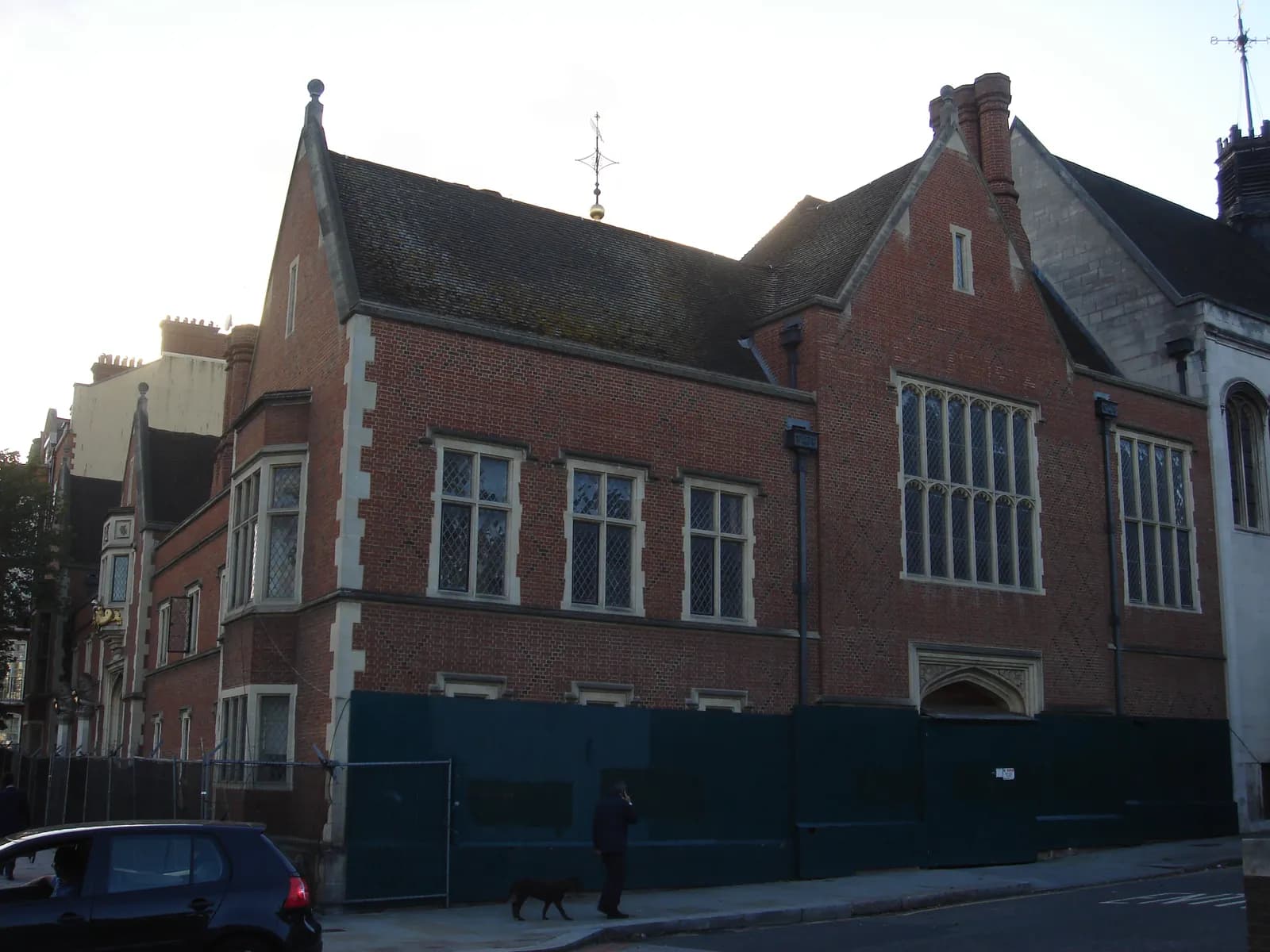
One of the most remarkable buildings on Cheyne Walk is Crosby Hall. Its Great Hall was originally constructed in Bishopsgate in 1466 and was relocated stone by stone to its present site in 1910. It is the only surviving example of a medieval City merchant house in London and is considered the most important surviving secular domestic medieval building in the capital.
At its original Bishopsgate location, the hall counted Richard III, Catherine of Aragon, Sir Thomas More, Sir Walter Raleigh and Mary Sidney among its residents. The building is Grade II* listed and has been renamed Crosby Moran Hall following its conversion to a private residence in 2021.
Recent Residents
The street has continued to attract notable figures. Mick Jagger and Marianne Faithfull lived at number 48 in 1968. Rolling Stones members Ronnie Wood and Keith Richards also kept residences on the Walk. Michael Bloomberg acquired number 4 in 2015.
Preservation and Character
Cheyne Walk has survived several threats to its character. Plans in 1951 to construct a new river wall and arterial road west of Battersea Bridge did not proceed. Greater London Council motorway proposals in the 1960s, which would have destroyed the area, were abandoned.
Today, Lindsey House remains in the ownership of the National Trust, though it is tenanted. The street retains its eighteenth-century character alongside later Victorian additions. A collection of residential houseboats has occupied the western end between Lots Road and Battersea Bridge since the 1930s.